Levi C.Haynes
I’m Levi C. Haynes, a founder, systems architect, and product builder focused on a simple question: how do we make increasingly intelligent technology remain genuinely accountable to the people using it?
My work sits at the intersection of artificial intelligence, software architecture, product design, and digital sovereignty. I build systems around the principle of Local First, Not Local Only—keeping authority, identity, memory, and critical decision-making close to the user while still allowing powerful external models, infrastructure, and services to participate when they provide real value.
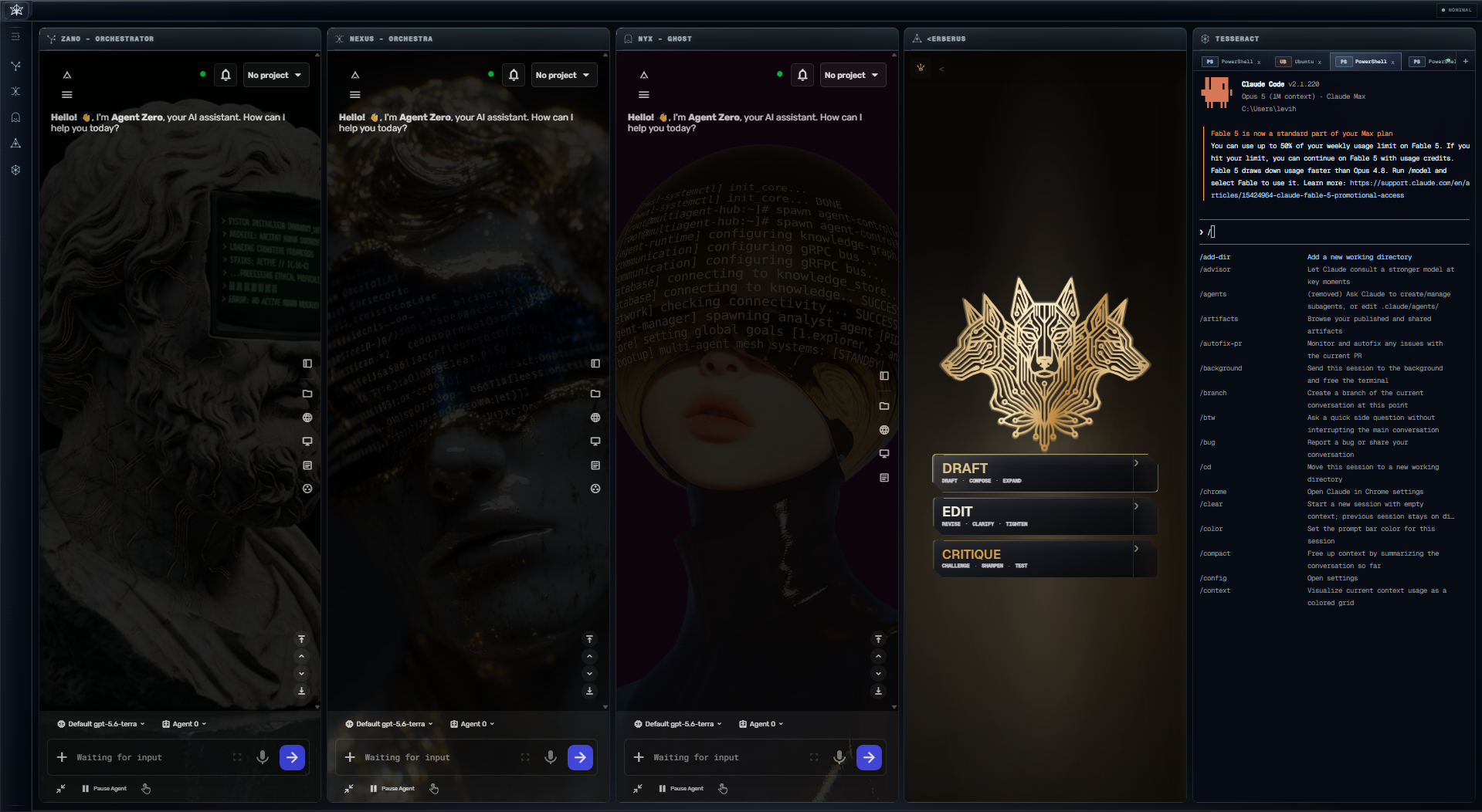
Through Zentraux Group, I’m developing products and frameworks that explore what human-directed autonomous systems can become. That includes ZIRCE-FLUX, agentic workspace architecture, multi-agent systems, local-first runtimes, adaptive digital familiars, and the infrastructure required to make those systems durable rather than disposable.
I’m particularly interested in the layer between intelligence and execution: how agents understand context, use tools, coordinate with other systems, preserve continuity, and ultimately return authority to the human operator. For me, autonomy is not about removing people from the loop. It is about building machines capable enough to act while remaining structurally answerable to human intent.
My engineering work spans Rust, Python, TypeScript, React, Next.js, infrastructure as code, model integrations, agent orchestration, desktop runtimes, and full-stack product development. But technology is only part of the work. I care just as much about interface design, system philosophy, operational resilience, and creating products that feel coherent from the architecture underneath them to the surface a person actually touches.
I believe the next generation of computing should feel less like renting access to someone else’s intelligence and more like operating technology that genuinely belongs in your world.
That is the direction I’m building toward: intelligent systems with memory, presence, capability, and agency—without surrendering the sovereignty of the person behind the machine.